01
Discover - Manage Cards Experience
Overview
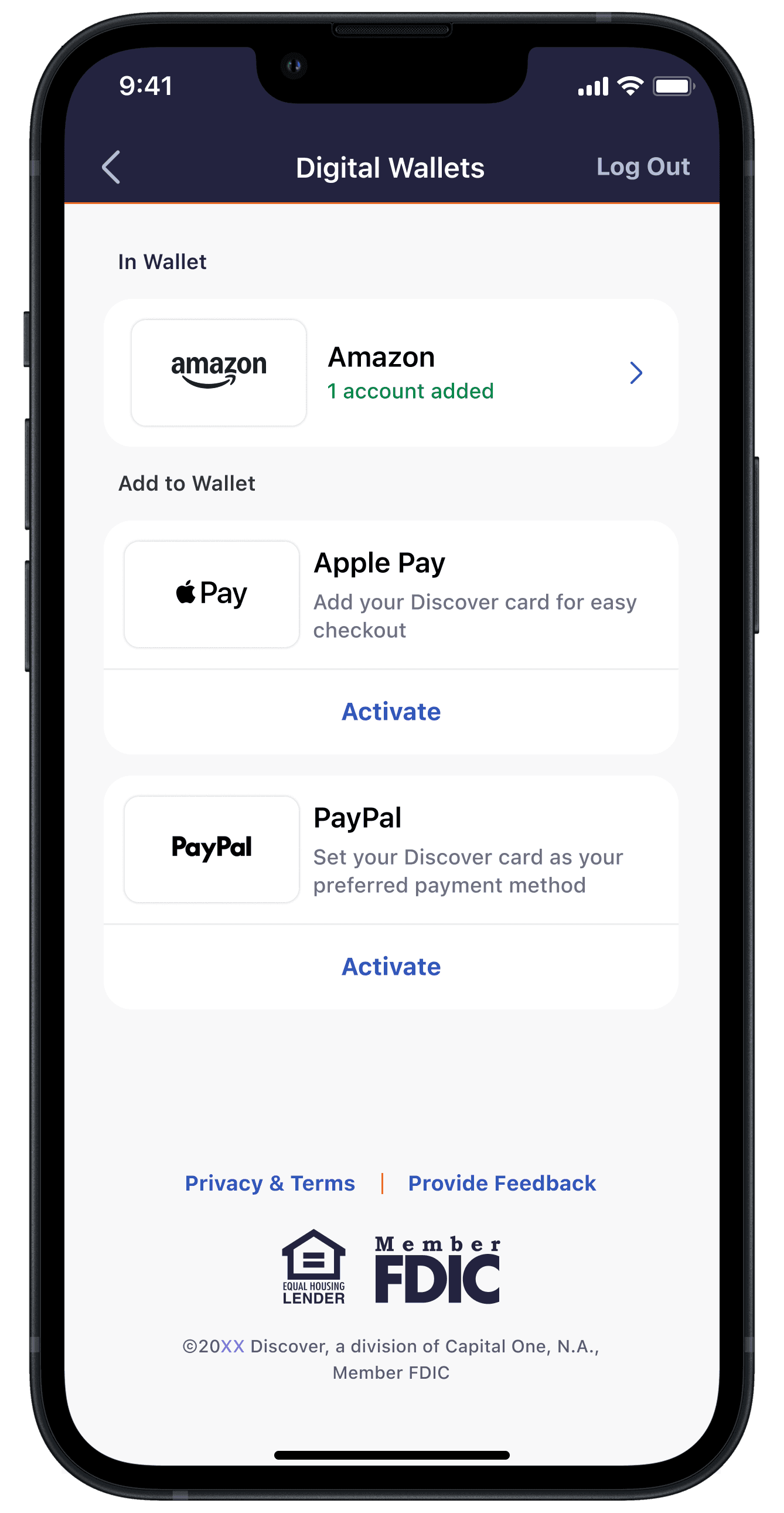
Manage Cards is a core feature within Discover’s mobile app that allows customers to manage their credit cards, including physical card access, security controls, and digital wallet integrations. The goal of this project was to redesign the Manage Cards page to improve clarity, usability, and alignment with user expectations in a mobile-first experience.
This work focused on simplifying navigation, improving wayfinding, and creating a scalable structure that supports both current and future card management features. The redesign directly impacted Discover’s credit card experience and its positioning within the digital wallets space.
I collaborated cross-functionally with UX Research, Consumer Insights, and the Radiant Design System team throughout discovery, iteration, and user testing.
Problem
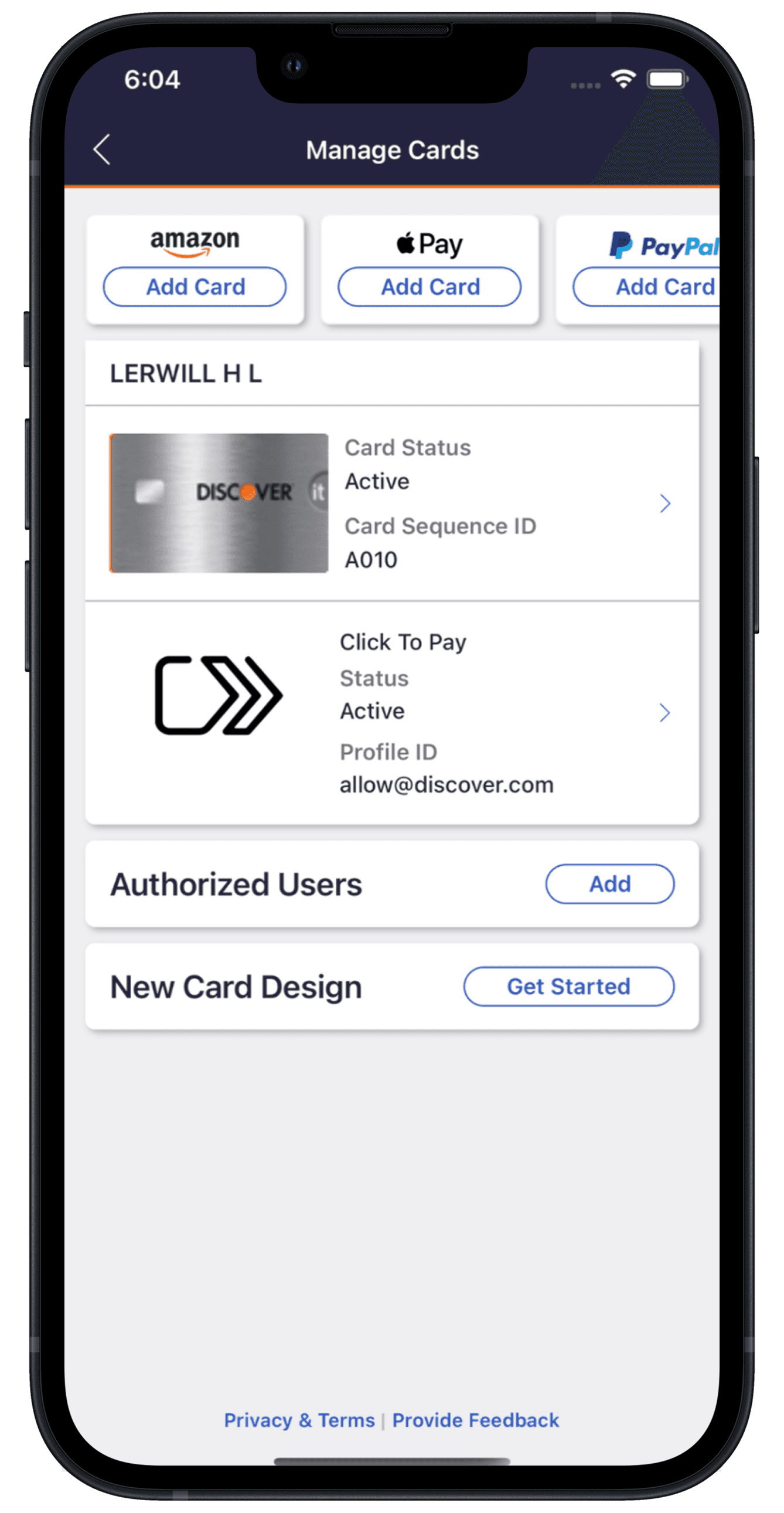
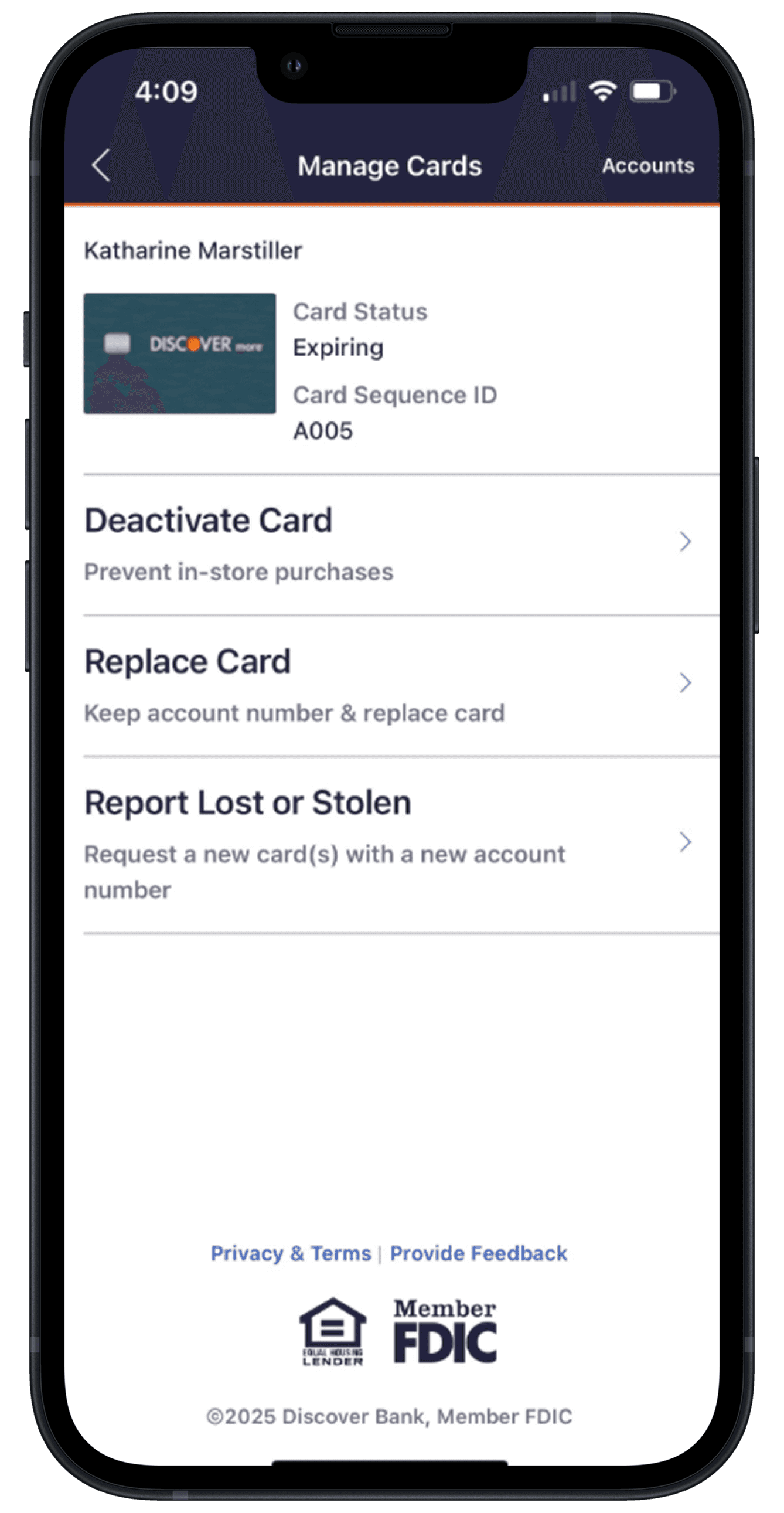
The structure of the existing Manage Cards page was largely undefined and did not align with user expectations.
A disorganized navigation experience:
Made it difficult for users to locate critical card management tools
Reduced scanability by visually grouping information without clear labels or boundaries
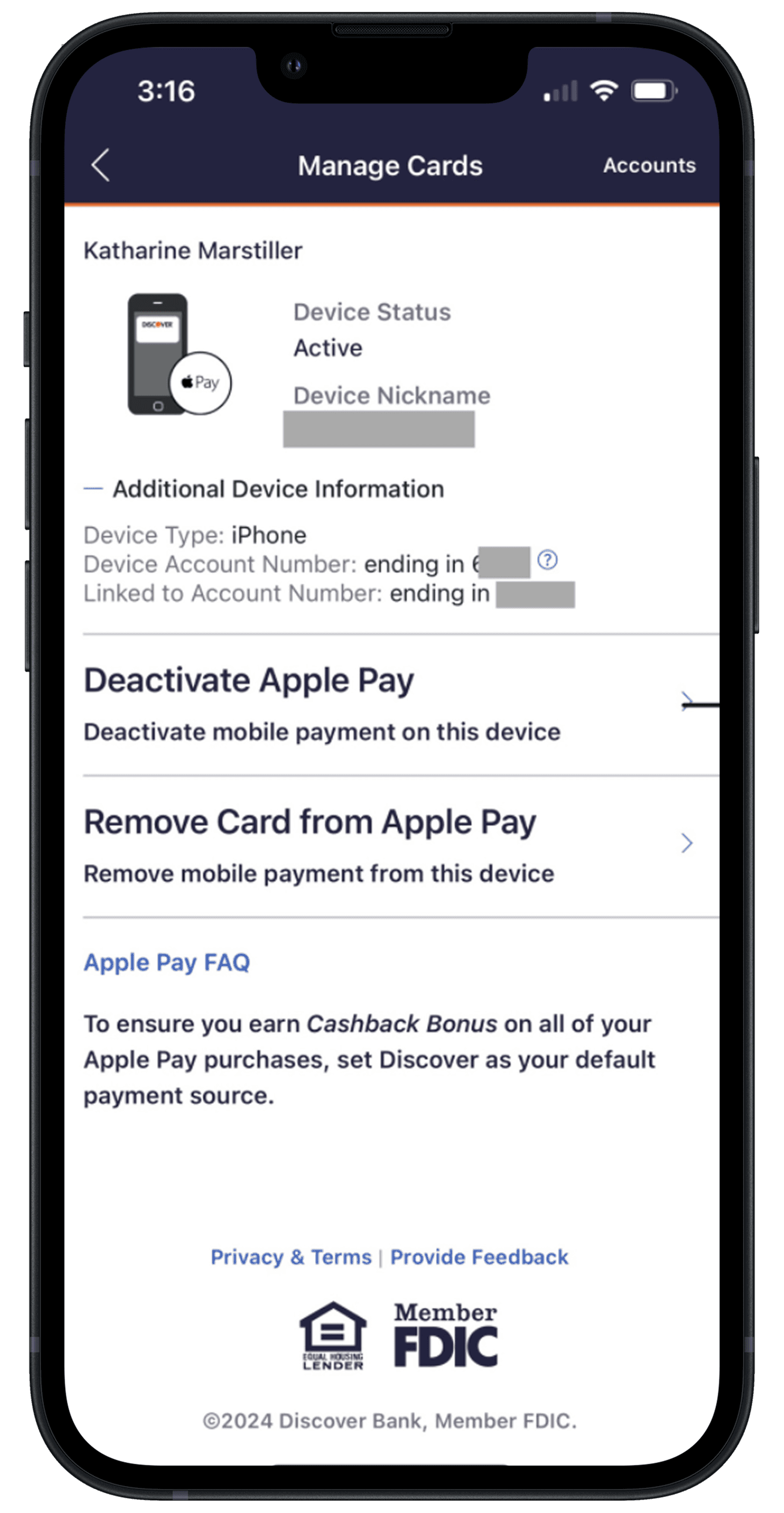
Created confusion for users managing multiple cards, authorized users, or digital wallets
These issues prevented efficient self-service and weakened trust in a high-impact area of the Discover app.
Solution
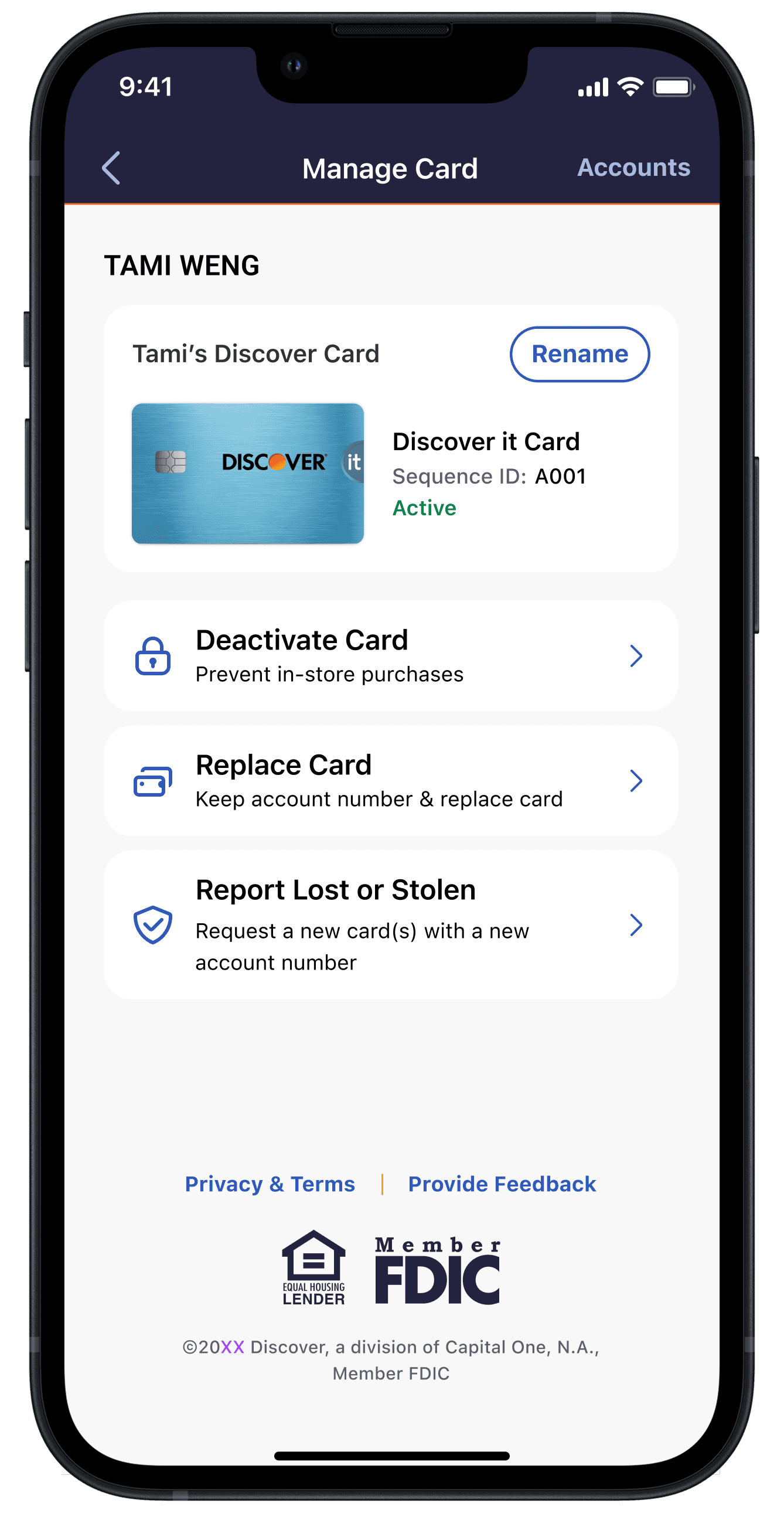
I redesigned the Manage Cards page to establish a clear hierarchy and more intuitive grouping of features. The updated structure prioritizes high-impact actions such as card security, clearly distinguishes physical cards from digital wallets, and supports scalability for future feature additions.
By improving wayfinding and reducing visual and cognitive clutter, the redesign helps users quickly accomplish their goals while reinforcing confidence in Discover’s digital card experience.

Insight
Research revealed that users primarily come to the Manage Cards page to complete high-priority, security-related tasks, yet the existing experience made these actions difficult to find.
A lack of hierarchy and clear grouping increased friction, especially for users managing multiple cards or devices. Improving structure and prioritization was essential not only for usability, but also for reinforcing user trust and encouraging engagement with Discover’s digital wallet offerings.
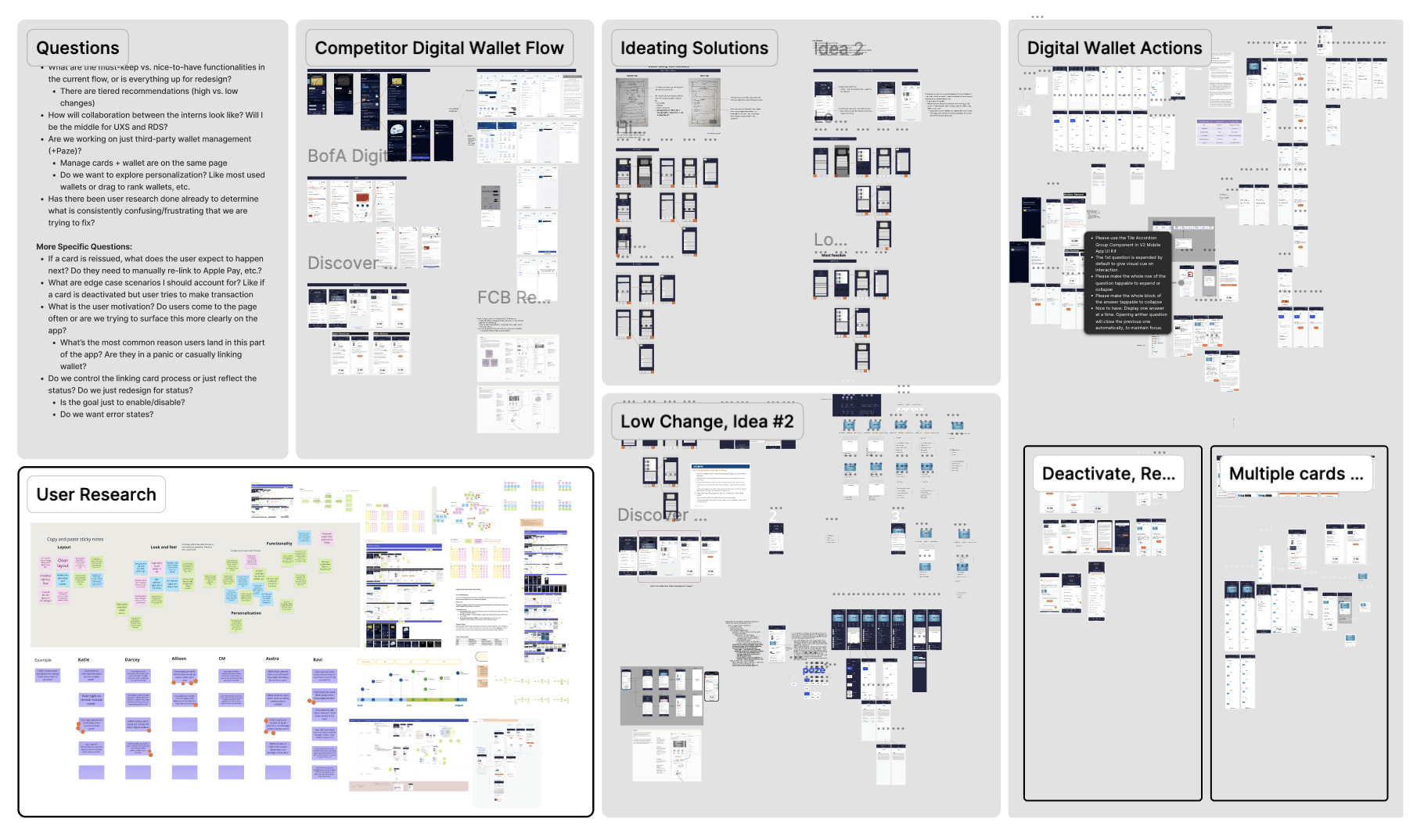
Ideating Solutions
Based on research insights, I explored solutions focused on clearer grouping, improved wayfinding, and prioritization of critical actions.
I participated in collaborative workshops designed to collect feedback and ideate opportunities for improvement. Activities included Rose, Thorn, Bud, affinity mapping, statement starters, and 10x10 brainstorming.
These sessions helped validate early ideas while uncovering areas that required further iteration.
Design Iterations & Reviews
To validate structural changes while balancing business constraints, the design evolved across two major rounds. Each round explored both MVP and North Star directions to compare near-term feasibility with longer-term experience improvements.
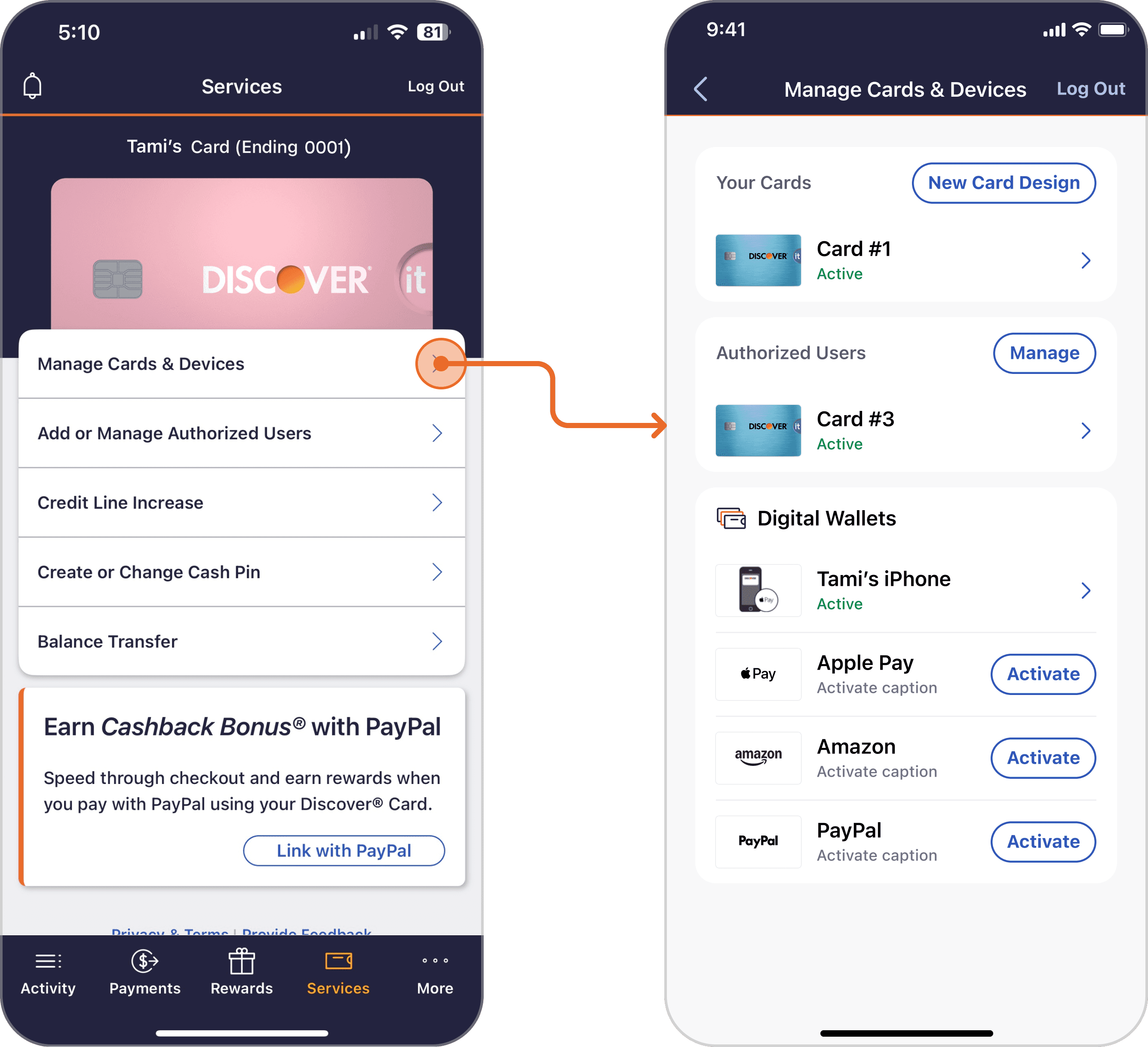
R1 MVP: Incremental Improvement Within Existing Architecture
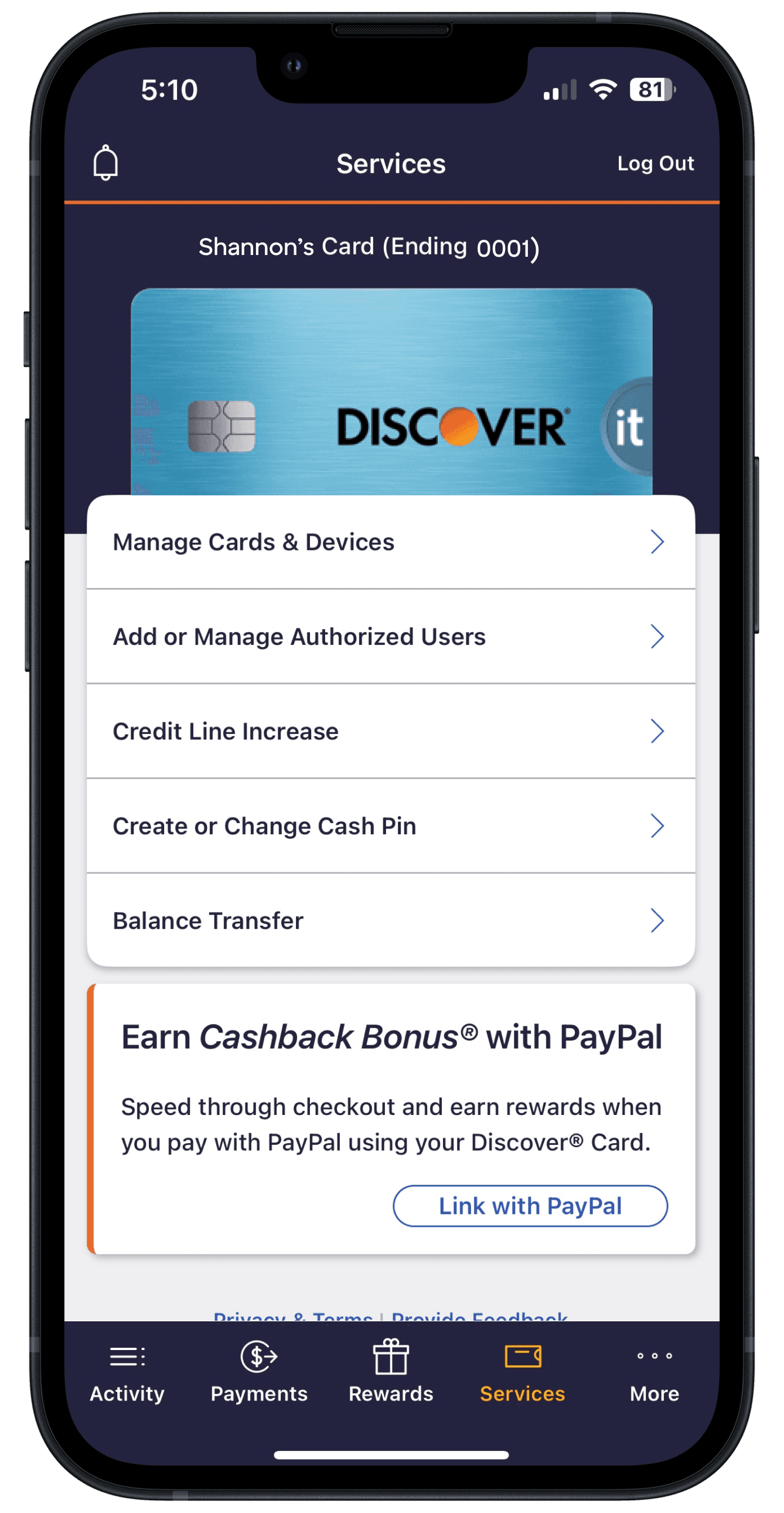
The MVP focused on a light visual refresh and clearer organization within the existing Services tab.
Introduced a Manage Cards & Devices accordion below the card art
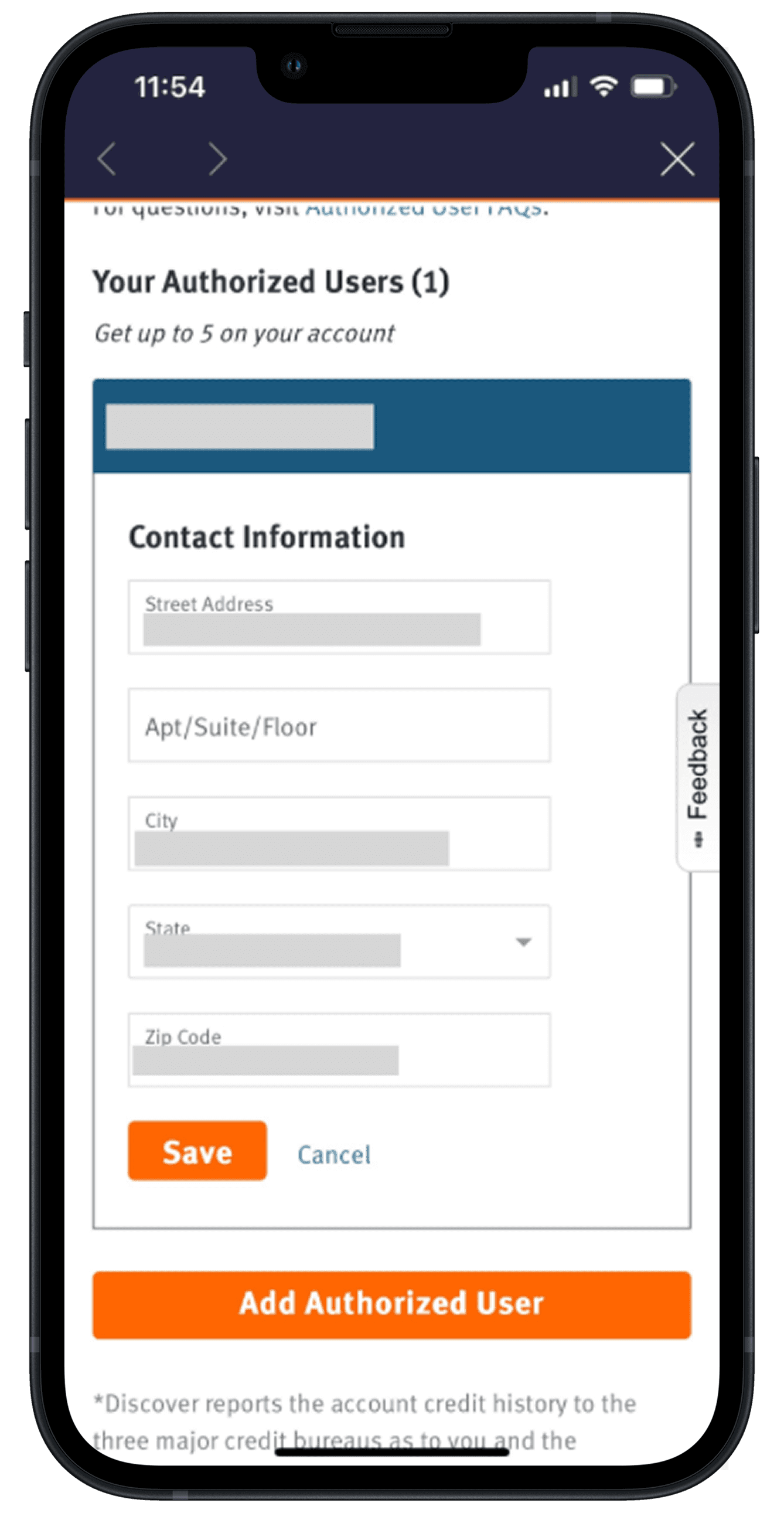
Grouped Physical Cards, Authorized Users, and Digital Wallets into clearly labeled sections
Maintained existing click paths and feature access to avoid revenue impact
This approach improved scanability without changing how users navigated to key actions.
Round 2 (R2): Refinement Through Feedback and Clarity
Goal: Improve comprehension, reduce repetition, and clarify complex card concepts while preserving usability..
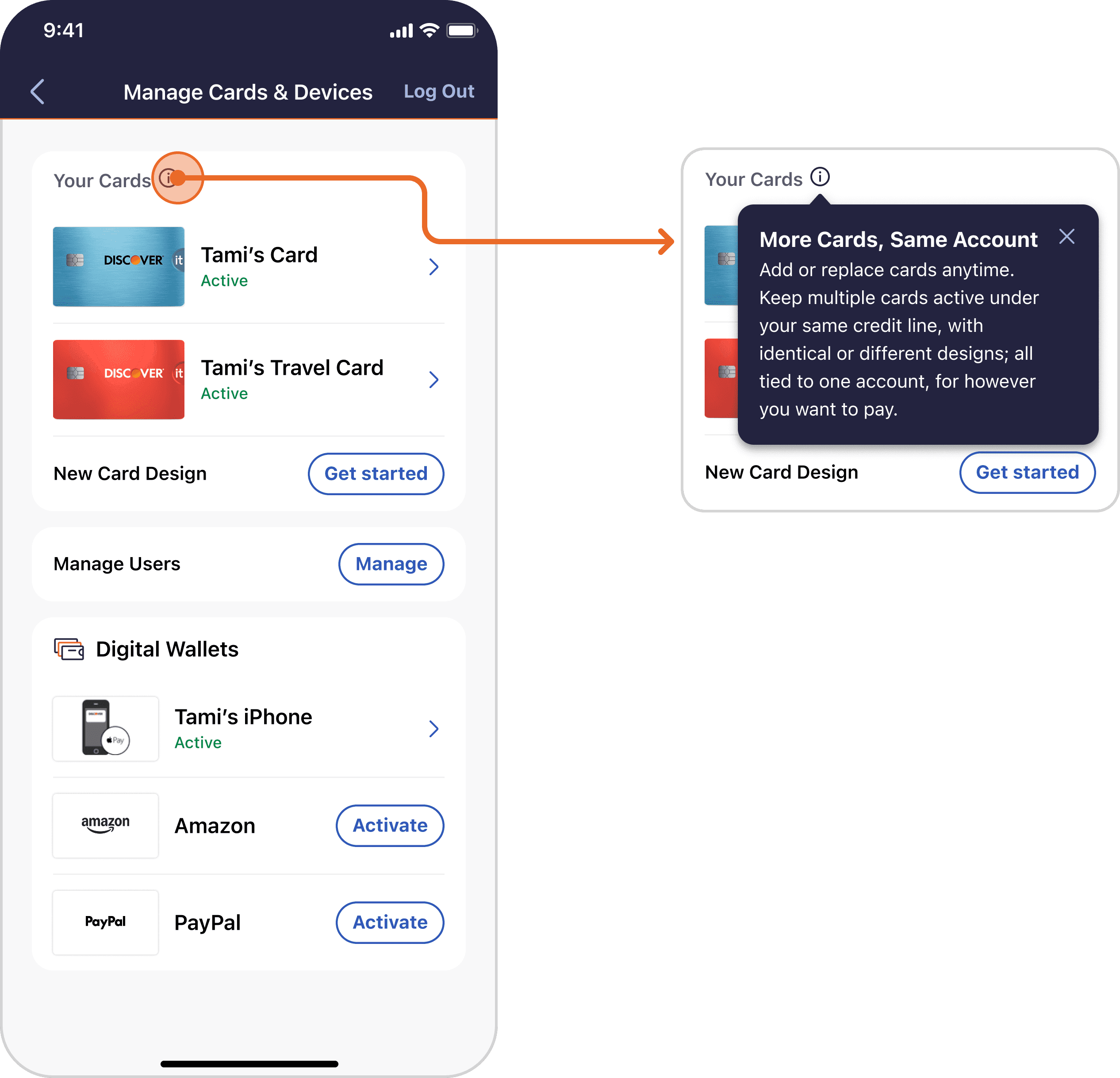
R2 MVP: Improving Visibility and Explaining Complexity
Building on R1, the MVP focused on refinement rather than restructuring.
Increased card visibility with larger visuals
Added an info tooltip to explain the Card Copy feature
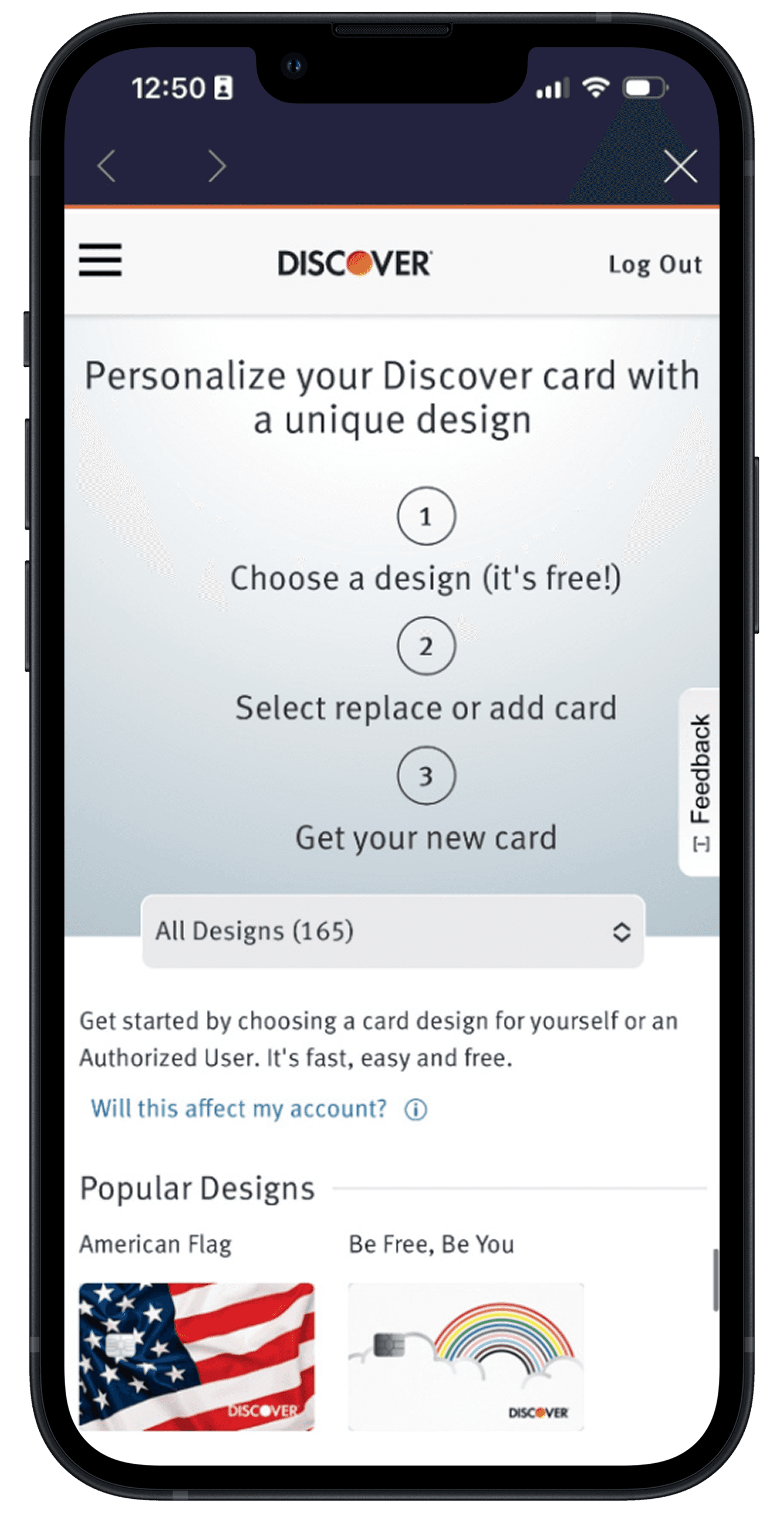
Moved New Card Design and Manage Users CTAs closer to their respective content
Simplified Digital Wallet statuses to reduce visual clutter
This round highlighted ongoing confusion around card copies, signaling a need for deeper evaluation.
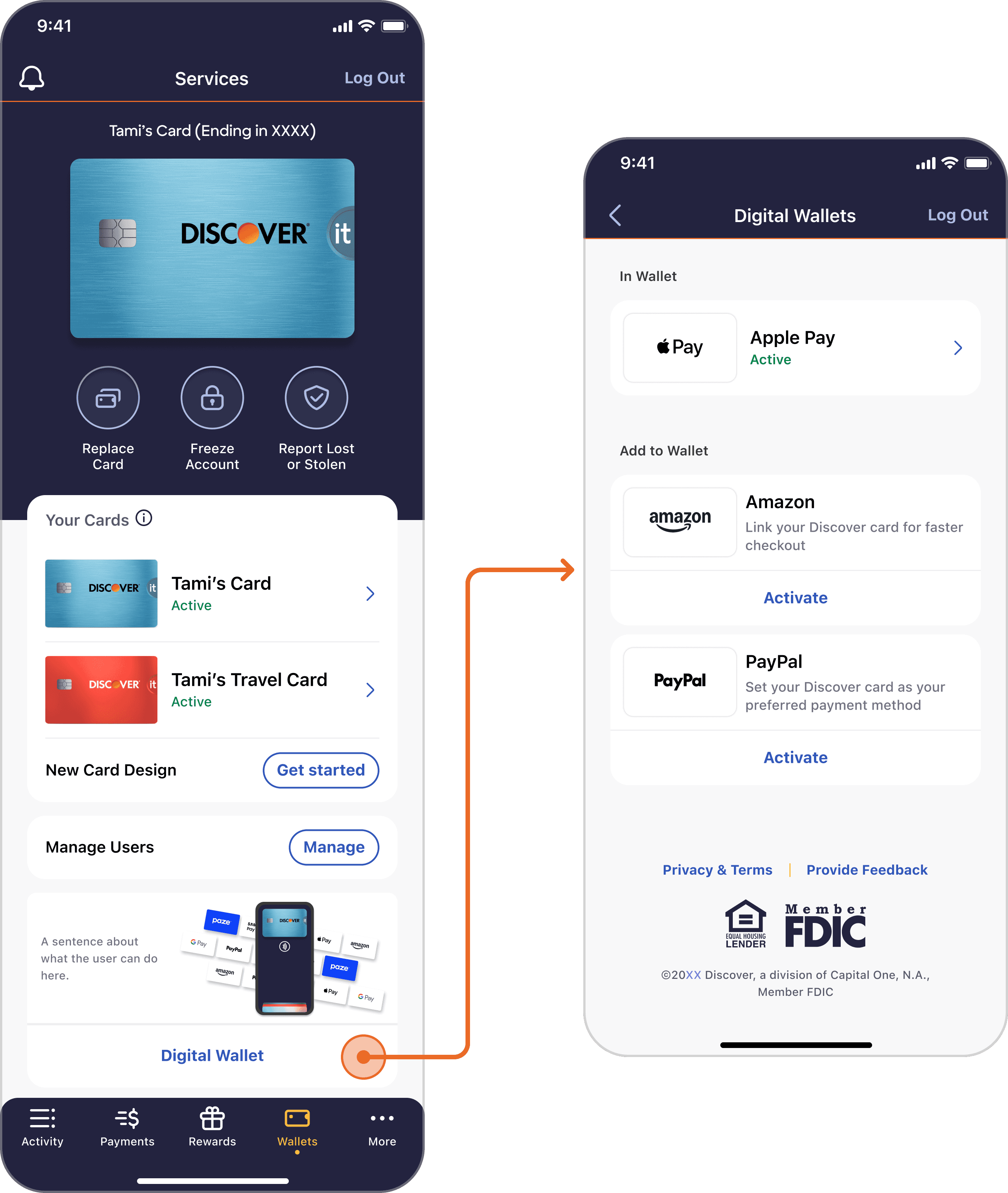
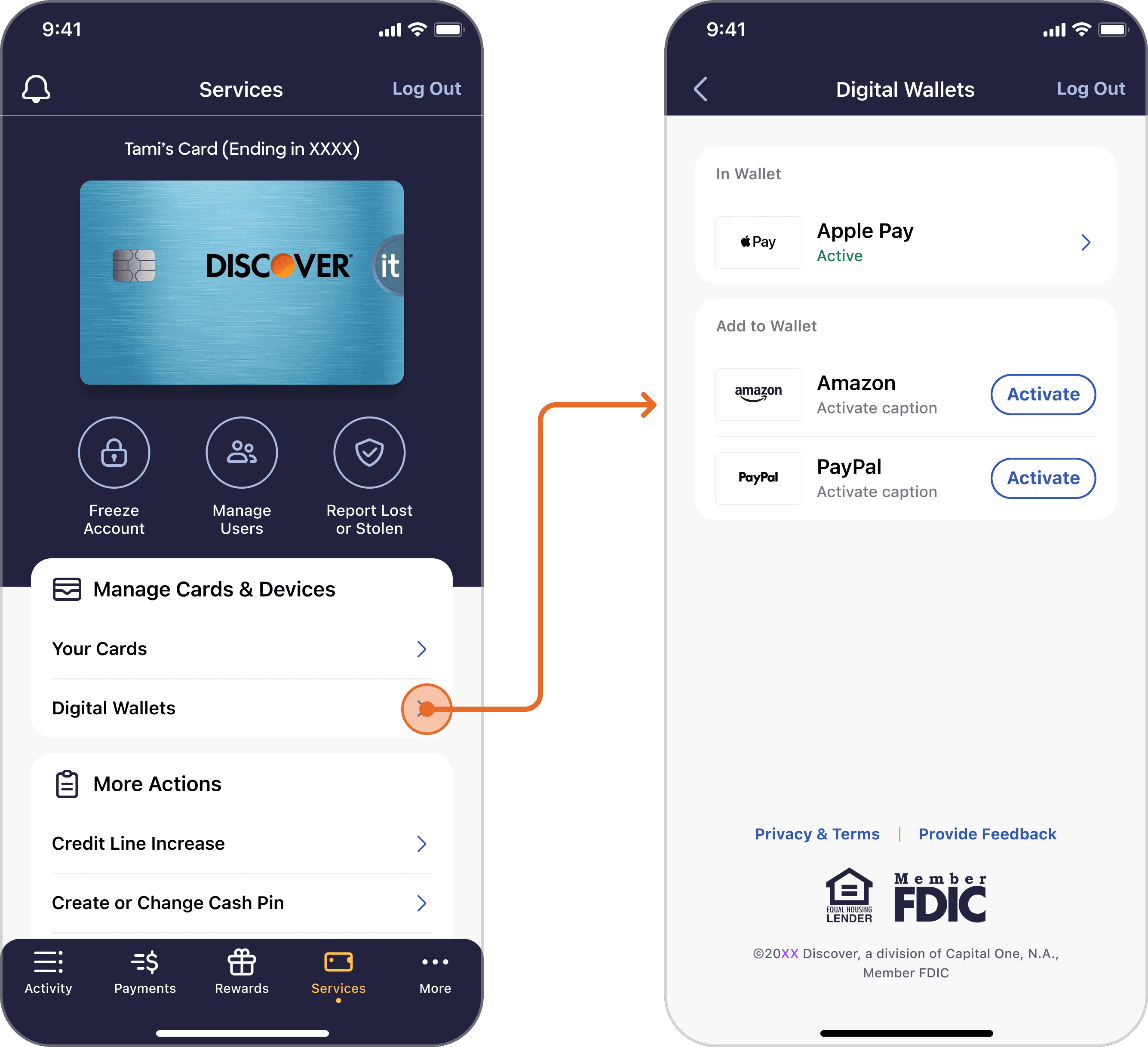
R2 North Star: Reducing Friction and Elevating Priority Actions
The North Star emphasized speed, clarity, and task completion.
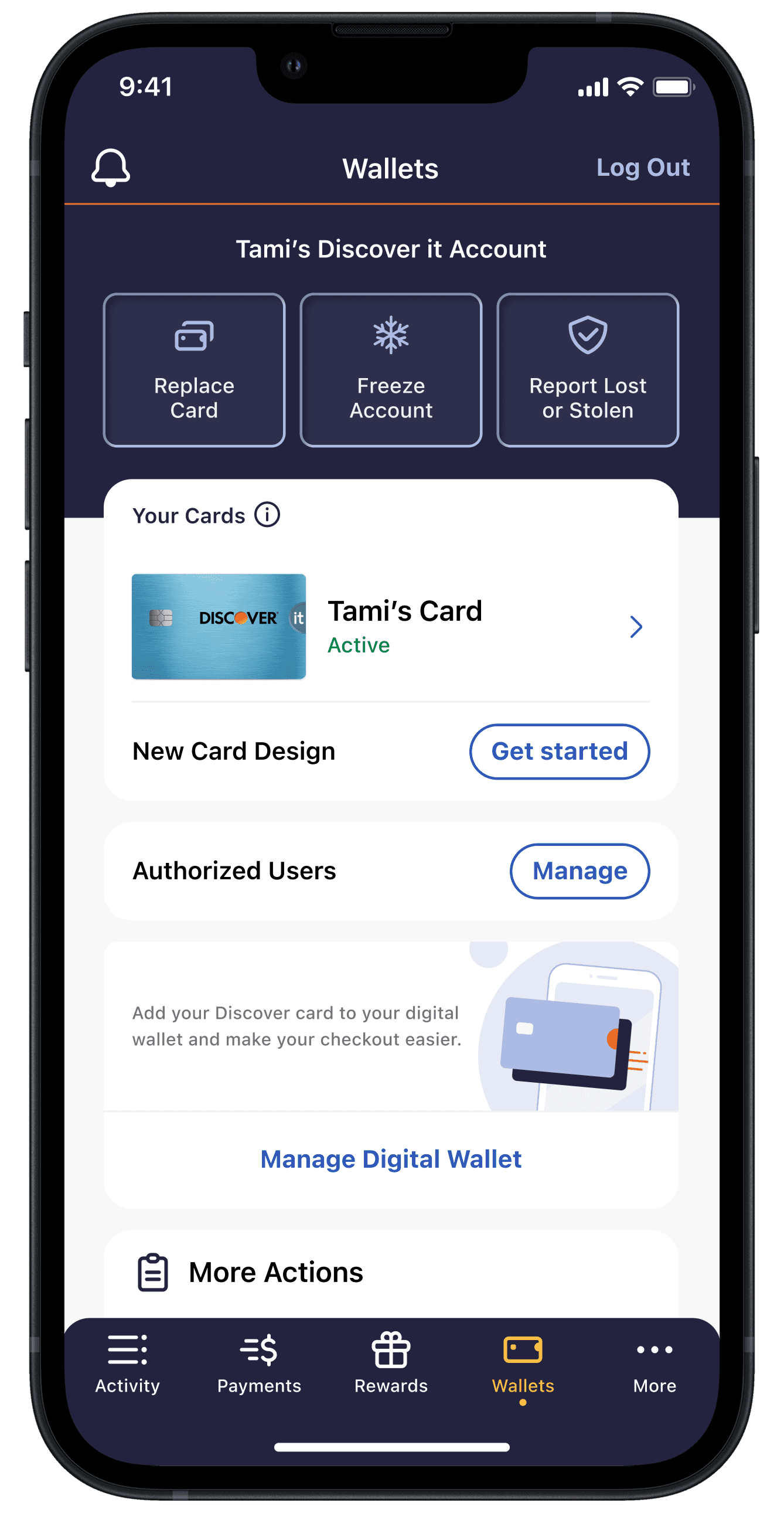
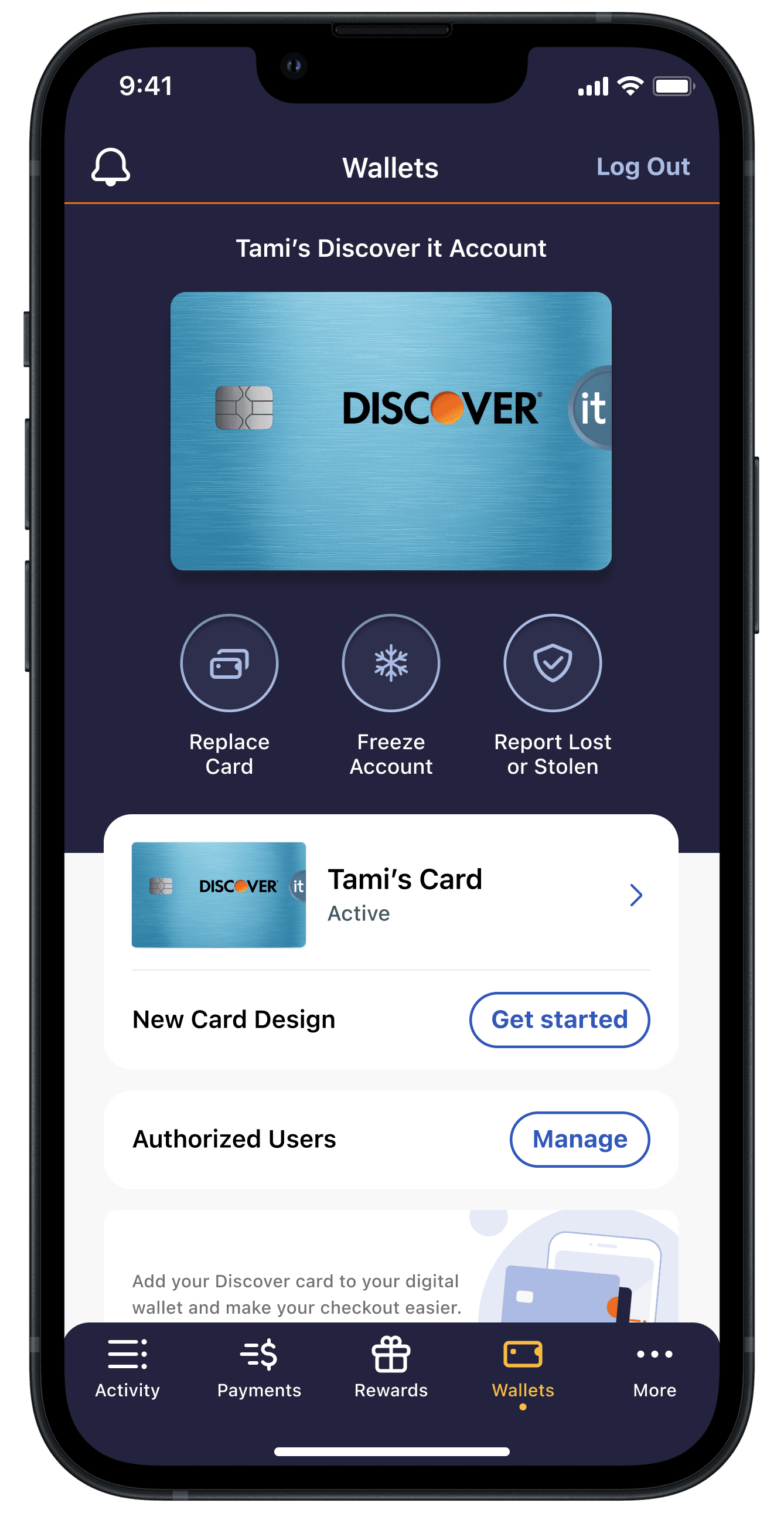
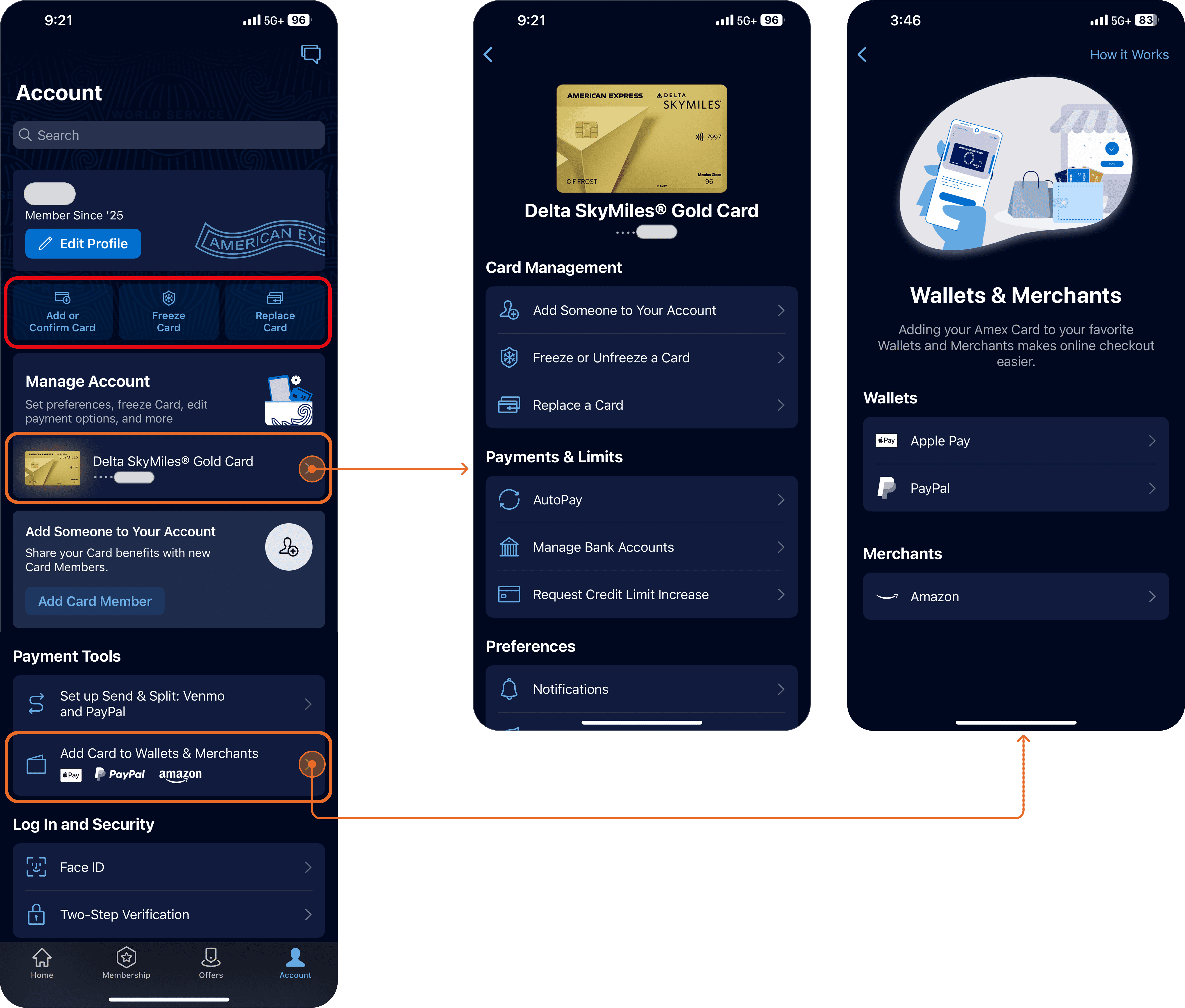
Updated Quick Action Tiles to Replace Card, Freeze Account, and Report Lost or Stolen
Surfaced Physical Cards directly to reduce navigation depth
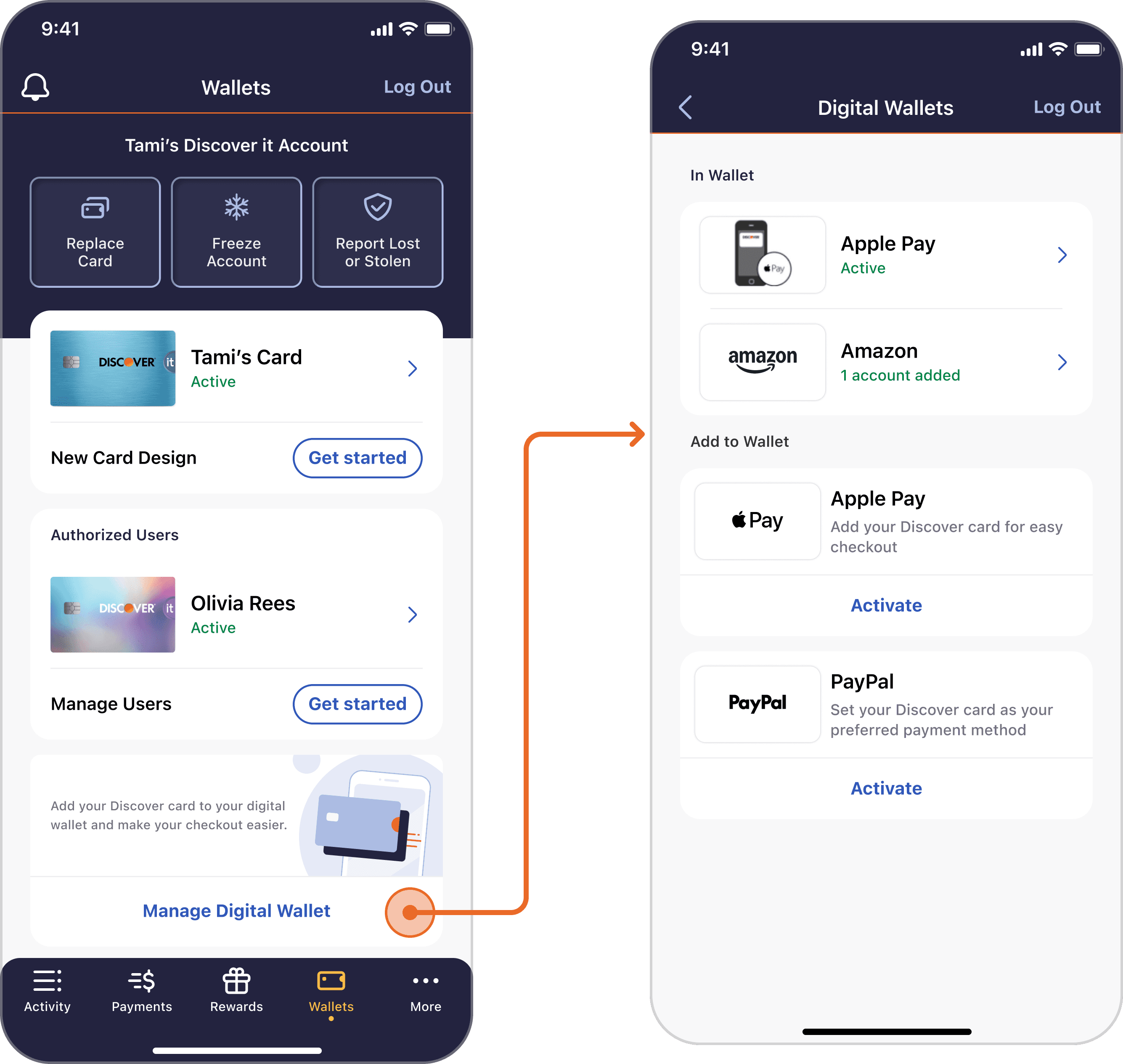
Elevated Digital Wallets with a visually prominent section, descriptive copy, and clear CTA
Redesigned wallet activation states to better communicate readiness and status
This significantly reduced friction for high-priority actions.
Design decisions were informed by a combination of cross-functional workshop feedback and usability testing with Consumer Insights, allowing qualitative insights to be validated through measurable outcomes.
Qualitative Feedback
Across reviews, consistent themes emerged:
Feature grouping felt clearer and more intentional
Quick action tiles improved access to common, security-related tasks
Digital wallets were easy to find but needed stronger visual distinction
Repeated actions across sections introduced unnecessary complexity
Quantitative Validation
To validate these insights, two one-click usability tests were conducted on July 2, 2025, with 209 U.S. banking users (18+), comparing MVP and North Star designs.
Key results
Locate Credit Card: 50% (MVP) → 51% (North Star)
Set Up Apple Pay: 37% → 56%
Report Lost or Stolen: 37% → 53%
New Card Design: 61% → 77%
Overall, the North Star consistently outperformed the MVP on high-priority security and wallet tasks. These results reinforced the importance of clearer hierarchy, reduced nesting, and stronger visual emphasis, directly informing the final design direction.
The Final Design
The final design introduces a more structured and intuitive Manage Cards experience that improves clarity, usability, and scalability.
Key changes include:
Your Cards & Authorized Users: All physical cards and copies are displayed together, with primary CTAs grouped consistently
Quick Action Tiles: Security-related actions are surfaced as quick-access tiles, reducing friction
Digital Wallet Section: Digital wallets are visually distinct from physical card details, using illustrations and descriptive copy to draw attention
Together, these changes create a clear hierarchy that supports both user needs and future product growth.
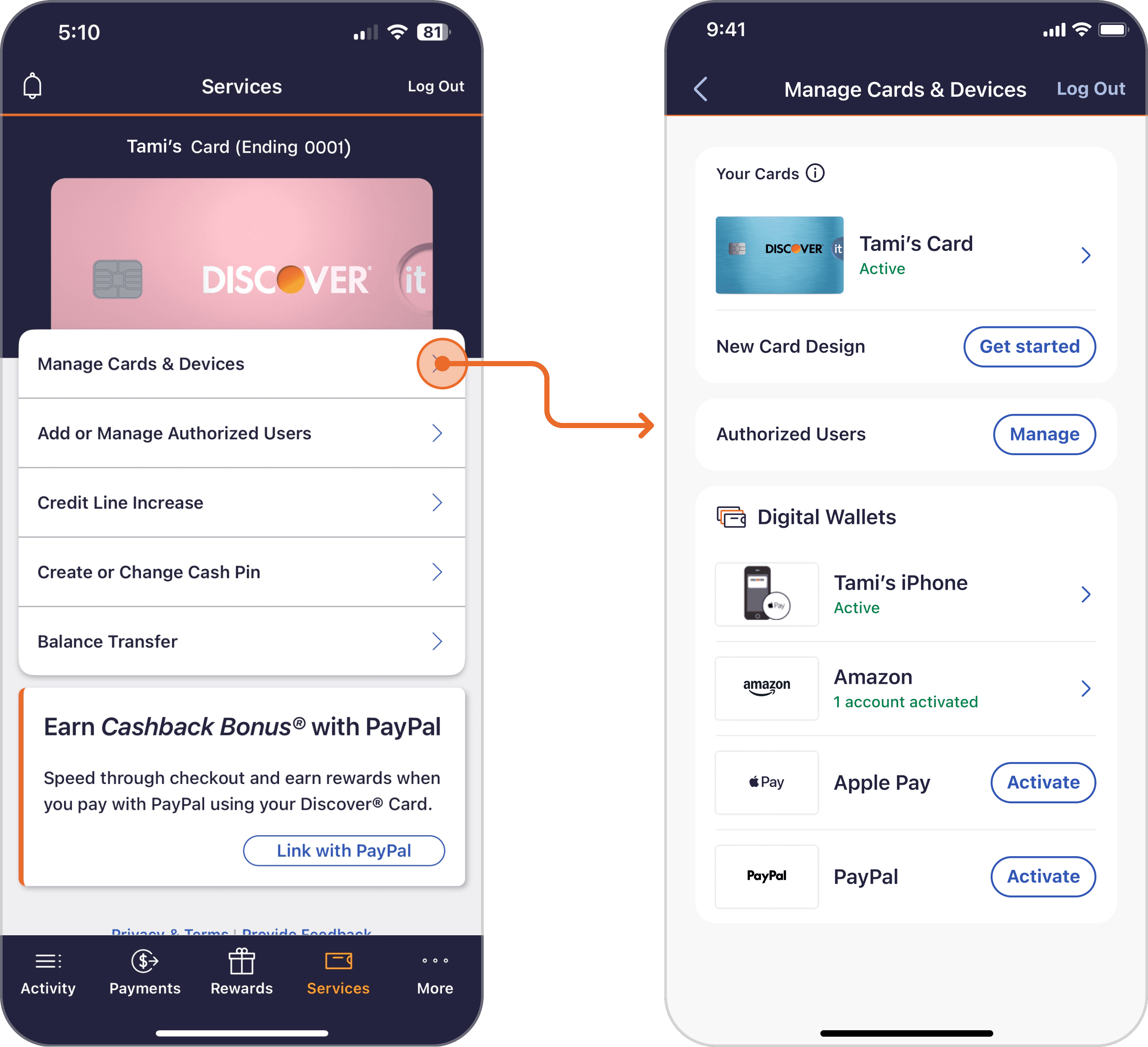
Final MVP: Polished and Production-Ready
Retains the Services tab and overall R2 structure
Refines copy, labels, spacing, and hierarchy
Delivers a low-risk, production-ready improvement
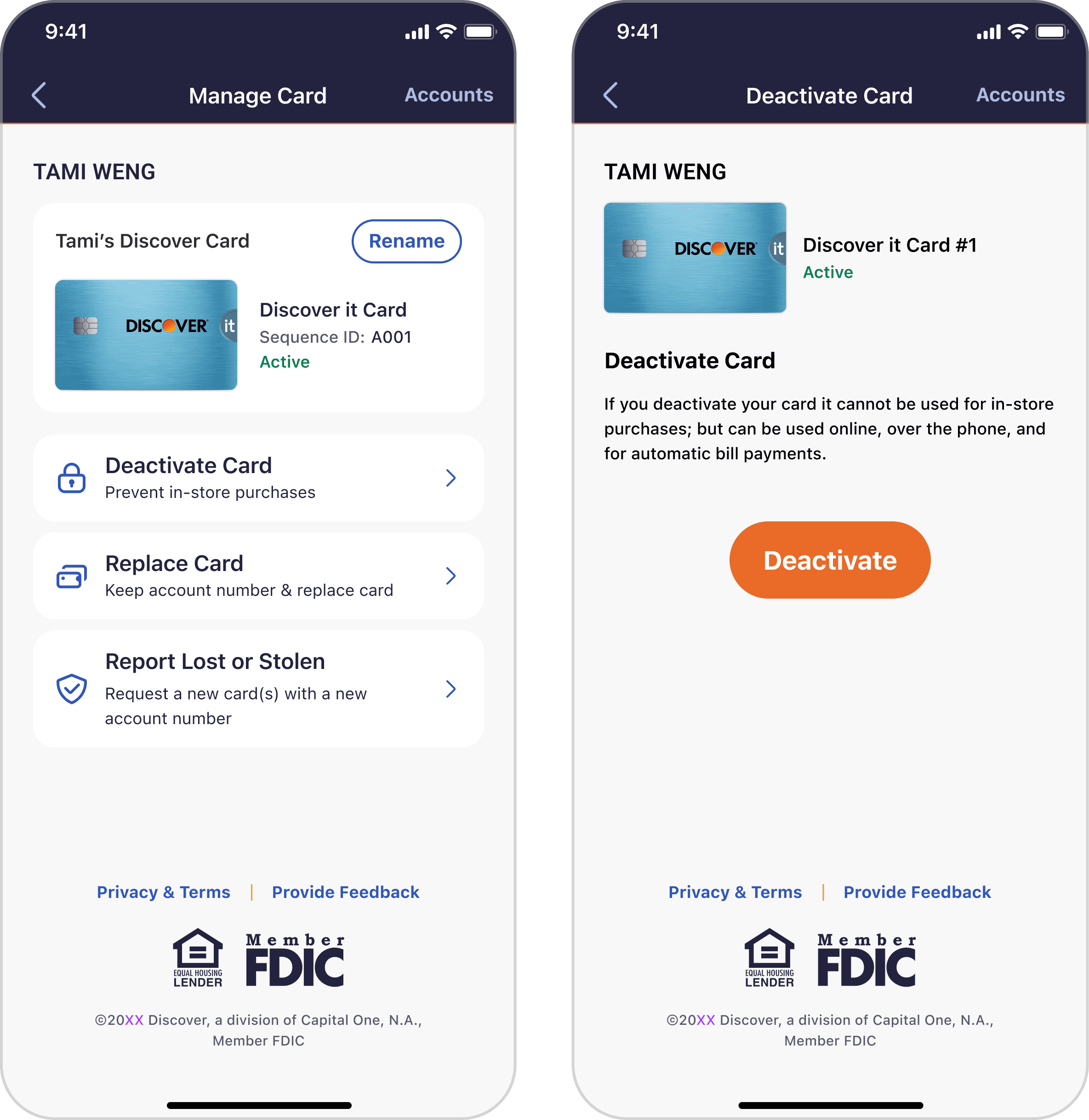
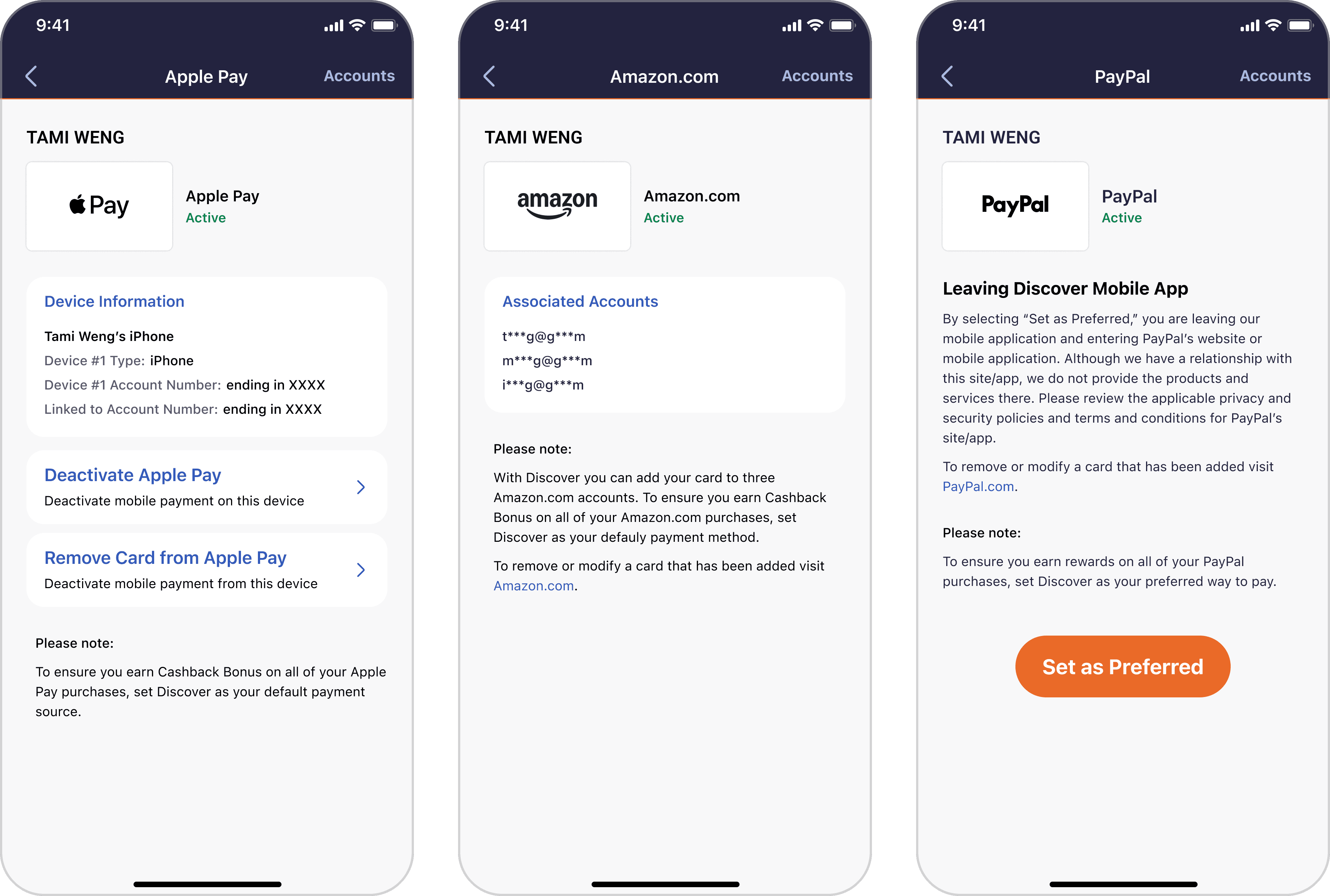
Final North Star: Clarity, Confidence, and Focus
Removed large card art to reduce confusion and redundancy
Introduced three rectangular Quick Action Tiles for visual consistency
Simplified Physical Cards to show only the primary card
Card copies were removed due to unclear value and internal inconsistency
Modernized the Digital Wallet section with clearer copy and a “Manage Digital Wallet” CTA
Conclusion
This redesign strengthens Discover’s Manage Cards experience by improving wayfinding, prioritizing critical actions, and creating a scalable foundation for future card-related features. By aligning user needs with business goals, the updated experience supports better self-service, increased digital wallet awareness, and a more confident card management journey.
Reflection + Future Trajectory
This project reinforced the importance of designing with scalability in mind while remaining grounded in user needs. I learned how small design decisions can significantly impact user trust, engagement, and revenue, especially within financial products.
Balancing research insights, stakeholder feedback, and business goals strengthened my judgment as a designer. Moving forward, opportunities include validating the card copy removal proposal, exploring APR visibility, and redesigning the “More” tab to reduce clutter and improve wallet discoverability.
02